How could the kasi creative economy drive township economic growth?
Posted by Floyd Baloyi (Community Manager)  on
21 January 2026, 14:55
SAST
on
21 January 2026, 14:55
SAST

If you walk through the streets of Soweto, Khayelitsha, or Umlazi on a Saturday afternoon, you don’t just see a residential area. You hear the deep, rattling log-drums of Amapiano shaking the windows of passing taxis. You see street fashion that rivals the runways of Milan, stitched by local designers. You smell the smoke of shisa nyama that attracts foodies from the suburbs and tourists from overseas.
For decades, the township economy has been viewed through the lens of survival—spaza shops and informal trading designed to put bread on the table. But there is a shift happening. A new wave of "Kasi’preneurs" is turning culture into currency, proving that the Kasi Creative Economy isn't just a side hustle; it is a sleeping giant capable of driving serious economic growth.
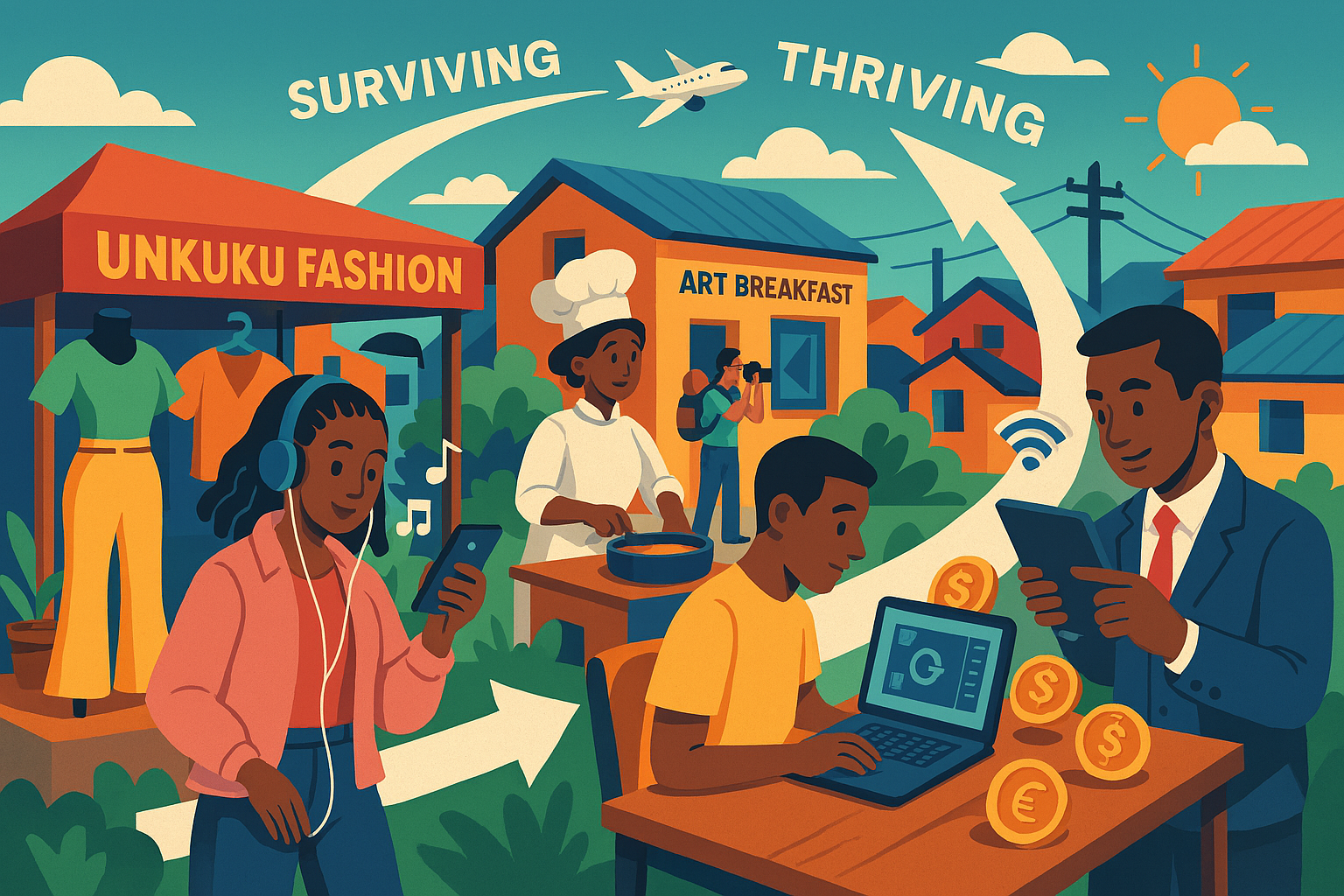
Here is how creativity can move the township economy from surviving to thriving.
1. Exporting Culture, Importing Revenue
The most immediate economic driver is the export of culture. South Africa’s biggest cultural export right now is arguably Amapiano. Born in the townships, this genre has gone global, dominating TikTok feeds and filling stadiums from London to Lagos.
When a township artist streams globally, royalties flow back into the community. But it goes deeper than music. This global attention creates a hunger for the lifestyle associated with the sound—the fashion, the dance, and the language. By formalizing these industries, townships can become export hubs for creative intellectual property, bringing foreign currency directly into local hands.
2. Tourism 2.0: The Experiential Shift
Township tourism has historically been voyeuristic—buses looking at poverty from behind glass windows. The creative economy is flipping this script.
Today’s tourists (both international and local) want immersion, not observation. They want to attend a local art gallery opening in Langa, take a cooking class in Mdantsane, or buy limited-edition streetwear in Alexandra.
-
The Economic Impact: When a creative ecosystem exists, tourists stay longer and spend more. They don't just drive through; they eat, shop, and engage. This creates a value chain that supports not just the artist, but the Uber driver, the B&B owner, and the local grocer.
3. Keeping the Rand in the Kasi
One of the biggest structural problems in the township economy is "leakage." Studies show that a massive percentage of money earned in townships is spent in suburban malls.
The creative economy fosters local pride and consumption. When young people see high-quality, desirable brands being produced by their neighbors—be it sneakers, graphic design services, or furniture—they are more likely to buy local.
-
The Multiplier Effect: If a local fashion designer sources their fabric from a local textile printer and hires local tailors, that single Rand circulates three or four times within the township before leaving. This circulation is the bedrock of sustainable economic growth.
4. Tech as the Great Equalizer
The "creative economy" isn't limited to paint and fabric; it includes coding, gaming, and digital design. Townships are young, and the youth are digital natives.
With the rise of remote work and the gig economy, a graphic designer in Diepsloot can work for a client in New York. We are seeing the rise of "Kasi Tech"—digital hubs where animators and app developers solve local problems with global tools. This bypasses traditional barriers like lack of transport or expensive office space in the CBD.
The Hurdle: Moving from Informal to Formal
To truly drive growth, we must address the elephant in the room: infrastructure.
Talent is abundant; resources are not. For the Kasi creative economy to scale, it needs:
-
Access to Markets: It's hard to sell a painting if you can't get it to a gallery in Sandton or ship it overseas.
-
Internet Access: Data costs in South Africa remain high, stifling digital creatives.
-
Funding: Banks are often hesitant to lend to "risky" creative ventures without traditional collateral.
The Way Forward
The Kasi creative economy is no longer a "nice-to-have"—it is a strategic asset. It turns the township's greatest resource (its people and their vibrant culture) into a tangible economic engine.
By supporting local creatives—whether by streaming their music, buying their art, or investing in their startups—we aren't just buying a product. We are funding the next generation of township industrialization. The revolution will not be televised; it will be streamed, designed, and manufactured in the Kasi.