Is the township creative economy unrealised?
Posted by Floyd Baloyi (Community Manager)  on
20 January 2026, 14:55
SAST
on
20 January 2026, 14:55
SAST

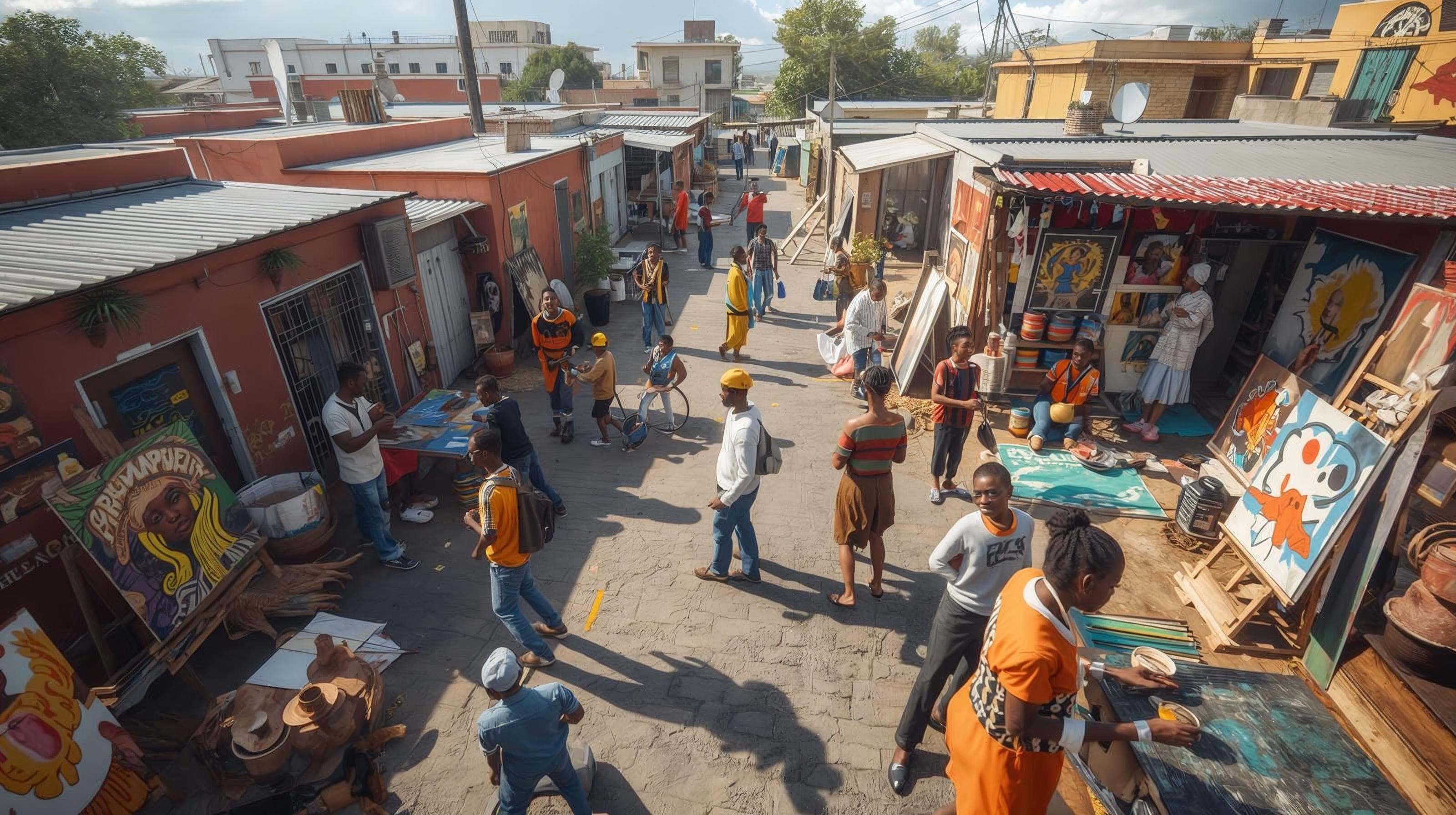
If you walk through the streets of Soweto, Khayelitsha, or Umlazi, you don't need a degree in economics to see the creativity. It’s in the amapiano tracks blasting from taxis, the disruptive streetwear brands born in backrooms, and the digital content creators turning dusty corners into viral sets.
South Africa’s "kasi" (township) economy is often touted as the country's next frontier of growth—a market estimated to be worth over R900 billion. Yet, when we drill down into the creative sector specifically—arts, film, fashion, design, and tech—we hit a hard truth: This economy is massively unrealised.
While the talent is undeniable, the transition from "hustle" to "industry" remains a bridge too far for too many. Here is why the kasi creative economy is still a sleeping giant, and what it will take to wake it up.
1. The "Survivalist" Trap
The first sign of an unrealised economy is the nature of the businesses within it. A 2024/2025 landscape analysis shows that the vast majority of township creative enterprises are "survivalist." They generate just enough cash flow to keep the lights on (literally and figuratively) but lack the capital to scale.
Unlike a creative agency in Sandton or Cape Town CBD, a graphic designer in the township often acts as the CEO, accountant, marketer, and cleaner. Without access to specialized labor or business management skills, these creatives hit a ceiling. They aren't building assets; they are surviving the month.
2. The Spatial Disconnect (The "Leakage")
The apartheid spatial planning legacy is still doing its job—keeping the township economy disconnected from the mainstream economy.
There is a phenomenon economists call "leakage." Money made in the township doesn't stay in the township. A creative entrepreneur might sell a product, but they often have to source their materials, rent their equipment, and access their banking services in urban centers (malls or CBDs). This means the value created by kasi creatives is constantly leaking out to big, established conglomerates rather than circulating locally to build a self-sustaining ecosystem.
3. The Infrastructure Gap
You cannot edit a 4K film or render a 3D architectural model without stable power and high-speed fibre.
-
Digital Divide: While mobile penetration is high, the cost of data in South Africa remains prohibitive for professional creative work. High-speed fibre is rolling out in townships, but not fast enough.
-
Physical Space: There is a severe lack of "maker spaces"—collaborative hubs, studios, or workshops. A fashion designer working from a cramped bedroom cannot fulfill a bulk order for a major retailer, no matter how talented they are.
4. The Funding Mismatch
Traditional banking models do not know how to score a creative hustler. A township photographer with irregular income and no title deed for collateral is "high risk" to a bank.
Government grants exist (like those from the Department of Sport, Arts and Culture), but they are often bogged down by bureaucratic red tape that requires a level of compliance (tax clearance, audited financials) that informal businesses simply don't have. This "missing middle"—too big for micro-loans, too risky for commercial banks—is where most potential dies.
The Green Shoots: It’s Not All Gloom
Despite these barriers, the "unrealised" label is being challenged by a new wave of resilience.
-
Tech Hubs: Initiatives like the Bandwidth Barn in Khayelitsha are proving that if you provide the infrastructure, the businesses will follow.
-
The "Mainstreaming" of Kasi Culture: Global brands are no longer just extracting culture; they are beginning to invest in it. From amapiano’s global dominance to local fashion brands like Bathu and Drip (which started in townships and moved to malls), the blueprint for success exists.
-
Digital First: Young creatives are bypassing traditional gatekeepers entirely, using TikTok and Instagram to sell directly to consumers, effectively "de-linking" their location from their market potential.