28-year-old developer from Gauteng township built a free app that uses AI to help South Africans get hired
Posted by Admin (JS) on 19 October 2026, 14:55 SAST

PUBLISHED IN MY BROADBAND - 10.06.2026
By Luis Monzon
Banele Mgwevu, a 28-year-old software engineer from Etwatwa, Gauteng, has built an app that uses AI to coach young people for job interviews and to help them craft optimised CVs.
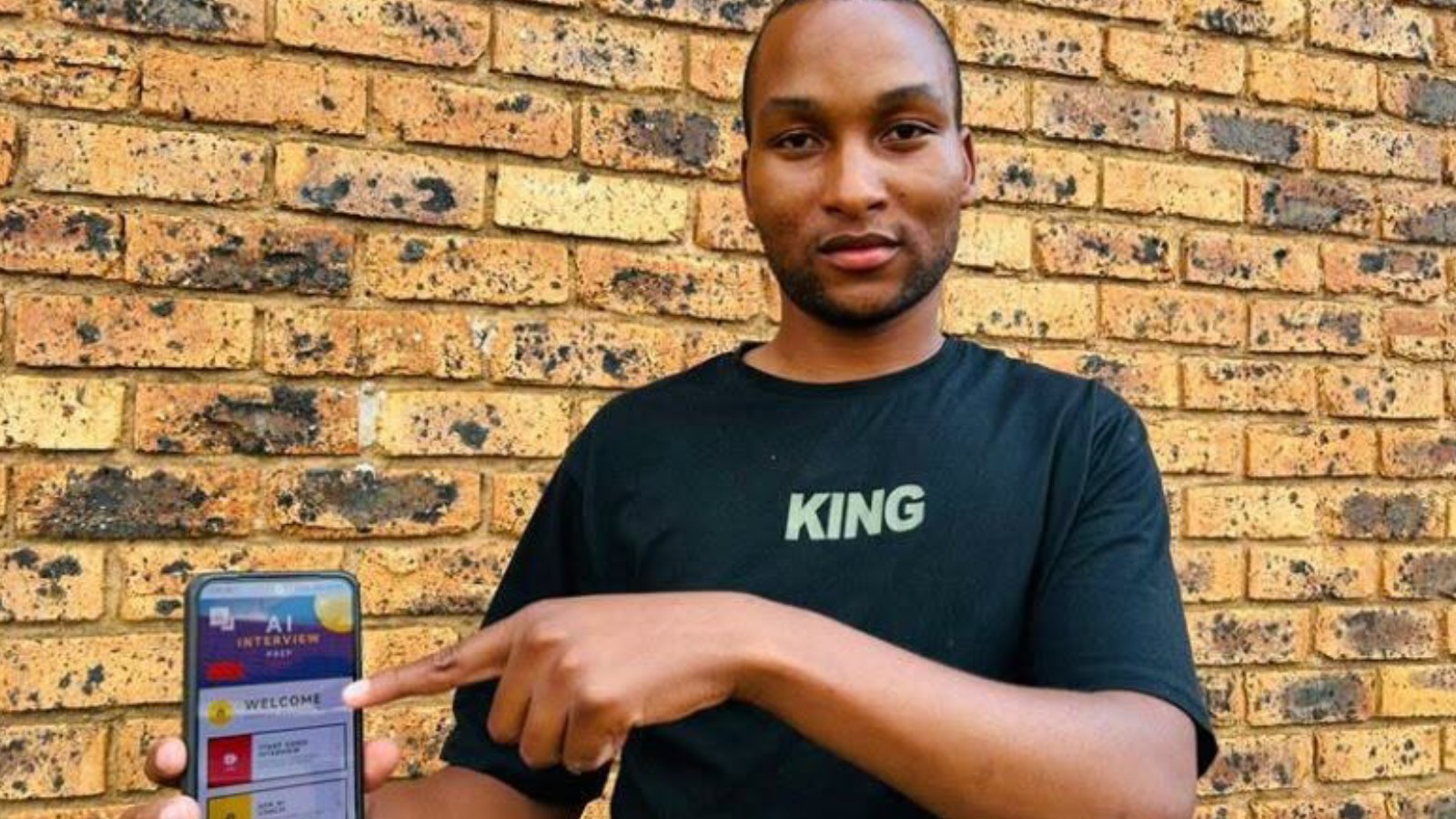
The app, called Itsago AI (pronounced its-a-go), uses a mixture of large language models like Google Gemini and Anthropic’s Claude and was developed and rolled out with minimal funding.
Mgwevu told MyBroadband that his career as a full-stack software engineer began with a career guidance teacher who told him he needed to go into tech.
“They saw that I was a bit of a naughty kid whose mind was all over the place, so they suggested I go into this field and even paid the application fee for me,” he said.
He graduated from the Tshwane University of Technology (TUT) in 2021 with a diploma in Software Development, and that same year began an internship at the South African software firm BriskFlow.
Mgwevu said that his time at BriskFlow was an exceptional learning experience and that he was immediately thrown into the deep end at the company.
“Which was very nice,” he said. “We also had big clients like KFC and PG Glass, so it was a really cool learning environment.”
He credited his mentor at BriskFlow for believing in him and encouraging him early on at the company. After his time at BriskFlow ended, he began working on a superapp for SoftMeet.
“It was really interesting because I got the chance to work in a social media company. Most people in tech want that experience, so I got to build that from scratch,” he said.
In January, he started working as an intermediate software engineer at the point-of-sale software provider Humble Till while also focusing on his own app.
He explained that his experience as a beginner in the software industry led to his development of the Itsago AI app.
“At the company I was working for previously, there was a restructure. There was uncertainty for me and the guys working there,” he said.
“I was getting interviews, but I was not very good at them. So, I decided to build something to help me practice.”
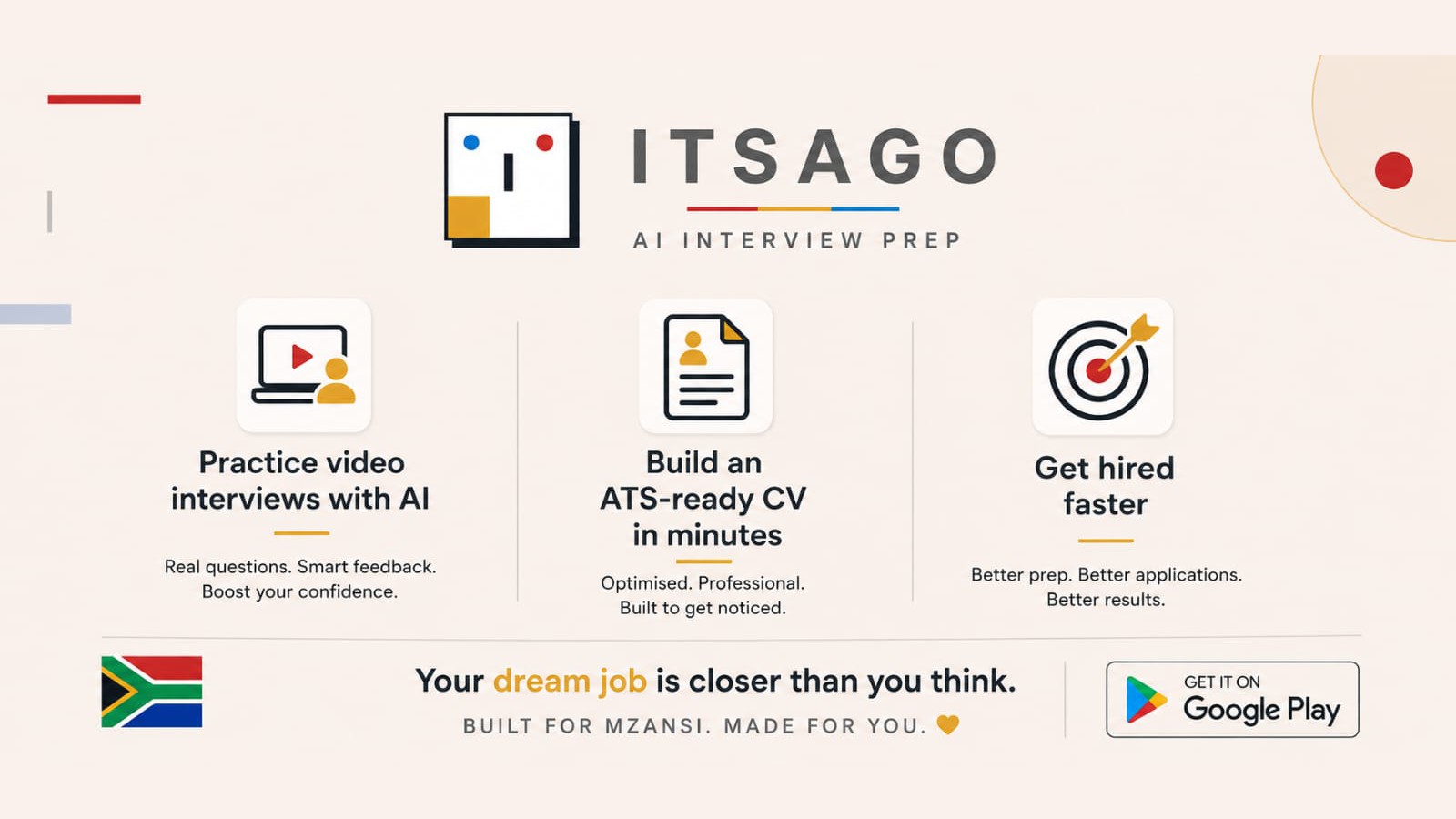
He said this was where the initial idea to build the app originated. He was its first user, and he credits AI coaching for helping him land his latest job.
“I built it based on where I am from, which is an underprivileged township, and I built the solution mainly for South Africans,” he said.
“I made sure the branding and wording resonated with the people because I saw that it has a real use case and can help people dealing with unemployment in the country.”
The official unemployment rate for the first quarter of 2006 stood at 32.7%, up 1.3% year over year, according to the latest Quarterly Labour Force Survey.
According to the survey, South Africa had over 8.1 million unemployed citizens, with young people disproportionately unemployed at 40.6%.
“When I made it public, people seemed to really like it. It is growing relatively well, and people are contacting me to say they love the app,” he said.
“They are telling me that it helped them fix their CVs or improve their confidence. They mention that the AI coach is really good and they can ask it anything.”
Itsago AI is available on the Google Play Store. The app is lightweight at only 70MB, helping to save on data costs.
Mgwevu said the app uses Anthropic’s Claude to help users edit and format their CVs to make them more Applicant Tracking System (ATS)-friendly.
He explained that the app uses Claude’s API and that he managed to secure 5 million tokens with a small amount of funding.
To minimise the number of tokens used per user, Mgwevu said he developed a machine learning algorithm that first determines how the app should respond.
“We limit the tokens and use caching on the backend. There is a machine learning model within the app that recognises familiar CV formats, reducing the need for excess tokens,” he said.
“It builds the CV using cached information because many people’s experiences and CVs are kind of similar.”
The other major aspect of the app is a Gemini-based natural-language voice coach that asks users questions as if they were in an in-person interview.
“We realised that while universities teach hard skills, students often lack soft skills in the real world. They do not know that they need an ATS-friendly CV, so we are helping them with that,” said Mgwevu.
Mgwevu said he is nearing a partnership with TUT involving Itsago AI, which could materialise as soon as next month. So far, the app has 600 monthly active users, so it’s slow-going.
However, he is steadily promoting the platform on social media like TikTok. The main challenge for the app’s growth was its lack of funding, followed by growing its user base.
He is also developing a second version of the app that he is looking to pitch to recruiters and use in a business-to-business model to help them screen candidates faster.
The uptake has been slow, as many companies have responded that the app is still small and that they do not yet trust the AI aspect of it.
“This first version serves as a proof of concept to show we are capable of building and scaling something like this,” he said.
“I am very optimistic about the app because of the feedback I have received. Despite developing it entirely on my own, it is stable, does not crash, and the user rating is high,” he said.
In the future, Mgwevu hoped to secure funding, investors, or mentorship on his journey with Itsago AI. “It would be greatly appreciated,” he said.