;)
The R500 Million ghost fund—why our economic blueprint is failing the kasi
Posted by Khanyisile Khuzwayo on 10 June 2026, 11:25 SAST

In the high-stakes world of South African economic policy, we are witnessing a "virtual farce" play out in real-time. By March 2026, the government’s R500 million Spaza Shop Support Fund stands as a monument to a profound disconnect. Despite the capital being available, the "gated" nature of the fund has meant that only 14% of applicants have successfully navigated the labyrinth of compliance required to access it.
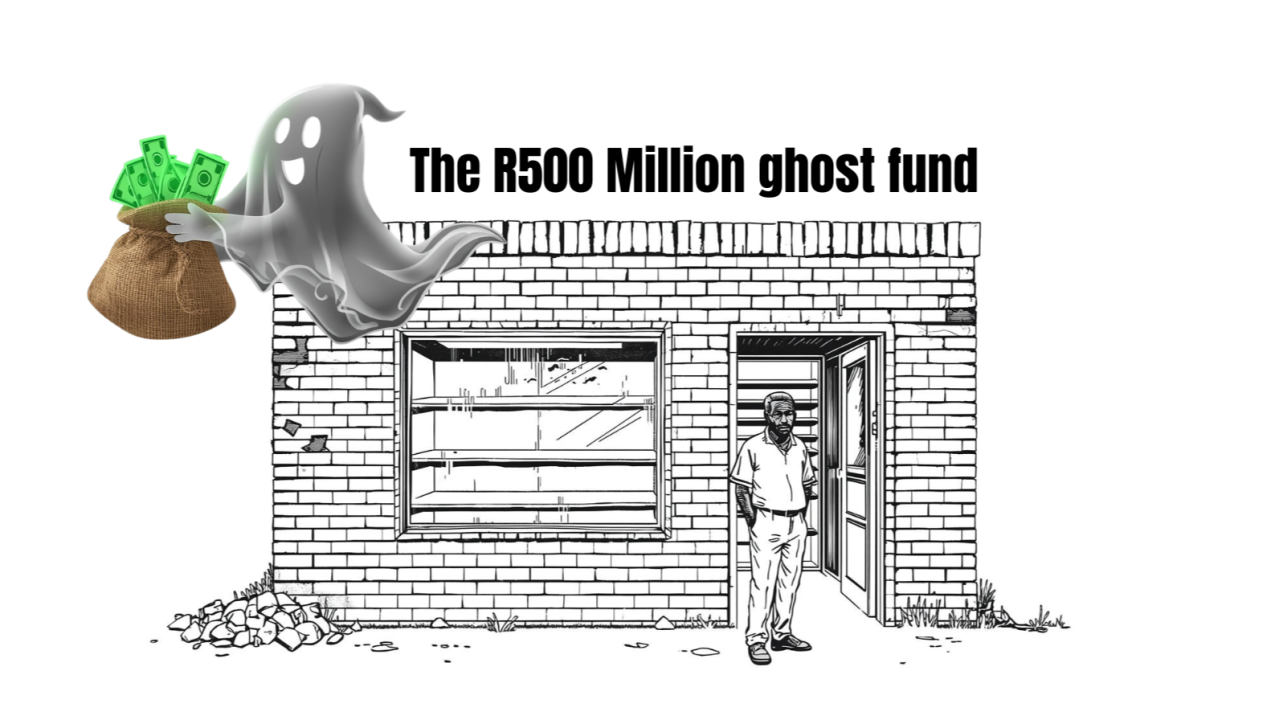
To the bureaucrat, this is a story of "low compliance." To anyone who understands the pulse of the township economy, it is a story of a blueprint designed for a world that simply does not exist on the ground. The R500m is sitting idle not because of a lack of will, but because of a systemic design flaw.
The carrot and the stick
For years, the state has attempted to drive formalisation using a combination of the "carrot" (grant funding) and the "stick" (punitive municipal shutdowns). However, when the carrot is locked behind a door that requires CIPC registration, SARS tax clearance, and formal title deeds, documents that many resilient, high-turnover businesses simply do not have, the incentive disappears.
When 86% of a target group cannot reach the "support" being offered, we must stop asking what is wrong with the entrepreneurs and start asking what is wrong with the requirements. We are currently asking a micro-retailer to provide the administrative output of a mid-sized corporate entity. It isn't just a hurdle; it’s a roadblock.
A chronology of conflict
Nowhere is the mismatch between regulation and reality more glaring than in the restriction of operating hours. Current municipal frameworks often dictate that spaza shops trade strictly between 07:00 and 21:00.
On the surface, this sounds like orderly urban planning. In reality, it is an economic chokehold. The township economy is powered by the commuter, the worker who leaves at 04:30 and returns long after 20:00. By the time the "legal" trading window opens, the primary customer base is already on a taxi to the city. By the time the shop is forced to close, the customer is just arriving home.
If a regulation ignores the actual lifestyle of the community it serves, it doesn't create order; it creates an environment where "non-compliance" becomes the only way to survive.
Regulatory rigidity vs. economic vitality
The Standard Bank Informal Economy Report reminds us that 80% of these businesses are unregistered. This is not because of a lack of "financial literacy," but because the "cost of compliance", in time, money, and bureaucratic friction, outweighs the perceived benefits.
We are currently attempting to solve 21st-century economic challenges with 20th-century colonial-era zoning logic. We demand building plans for shipping containers and formal leases for ancestral land. This rigidity is the "heavy equipment" currently blocking the path of South African innovation.
A Call for the "Third Way"
We need to stop the binary obsession with "Formal vs. Informal." This "all-or-nothing" approach is precisely why R500 million is sitting idle while local shops struggle to compete.
It is time to admit that the current binary of "Formal vs. Informal" is failing us. We need a framework that recognises the Spaza as a vital service provider. Imagine a system where compliance isn't a hurdle to jump, but a status that is earned through simple, digital-first verification. A status that grants the right to trade during the hours the community actually needs them, and provides access to funding based on the reality of their cash flow, not the perfection of their paperwork.
The R500 million fund shouldn’t be a reward for being "Formal"; it should be the fuel that helps a business evolve. If we don't change the framework, we aren't supporting the high-velocity informal retail sector - we are just watching it struggle from the safety of a boardroom.
By Janice Scheckter, Founder and CEO, KasiKonnect Pty Ltd (kasikonnect.online)